
Cairo and I (Her Comics)
EGP150Cairo, the city that will never be satisfied with you. Cairo is the dominance of the gods and the bewilderment of human beings. Cairo is a dinosaur.
Showing 13–24 of 54 results
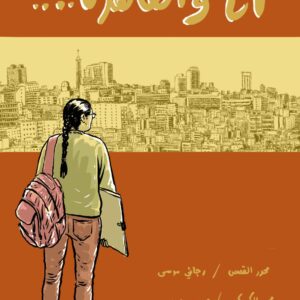
Cairo, the city that will never be satisfied with you. Cairo is the dominance of the gods and the bewilderment of human beings. Cairo is a dinosaur.
Perhaps one of the book’s most valuable sections is its chapter on evaluating movements, which offers an important learning resource for everyone involved in feminist movements and other social movements. The book presents three approaches to evaluation. The first is a **step-based approach**, which focuses on the processes of movement-building itself. It follows the same sequence of steps outlined earlier, assessing which have been completed, which have been skipped, and which need to be revisited. The second approach examines the different stages of a movement’s growth and its level of maturity, while the third focuses on evaluating the strength and overall capacity of social movements.

I move toward you with the speed of a prayer rising to God, with the force of a hurricane that strikes the land and leaves terror in the heart and scars upon time. The step I left behind pursues me, yet the bruise on my ankle smiles slyly: “Just once, my love—and after you, death will not matter.”
A Moroccan writer, born in 1963 in Oujda. He has published in a number of Moroccan and Arab magazines and newspapers since 1983.

Women’s stories have not yet been told. And without stories, experience cannot become clear or take shape. Without stories, women lose their way when facing the defining decisions of their lives. Without them, they cannot evaluate their struggles and recognize their true value, celebrate their strengths, or fully understand their pain. Without stories, women remain strangers to the deeper experiences of the self and distant from the experiences of the world that are often called spiritual or religious experiences. They remain enclosed within their silence. Moreover, the expression of women’s spiritual quest is deeply connected to the telling of women’s stories. If women’s stories are not told, the depths of their souls will remain unknown.
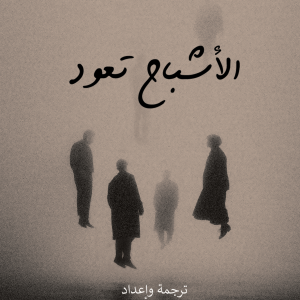
“I am a ghost, but I believe that I speak in my own voice, and that is precisely true, because I believe it is my voice that I have allowed to be taken over by another voice—not just any voice, but the voice of my own spectral selves. And this is how ghosts come into being.”
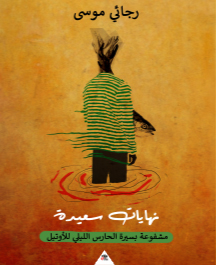
The novel explores the experience of alienation in the city and a profound sense of disorientation and loss, far from the hometown where the protagonist was born and raised.
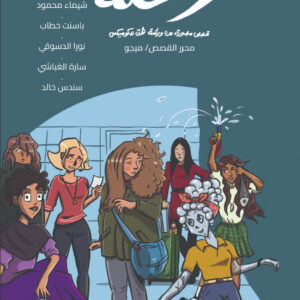
In this volume from the **“Her Comics” (Komiks Honna)** series, six women—Basent, Sara, Mariam, Shaimaa, Sundus, and Nora—draw and create their journeys, both real and imagined. Through these journeys, they explore their own paths toward liberation and their search for spiritual freedom.

The houses here are not merely houses. They are the houses of our childhood—dream houses we once inhabited. They are not daydreams, but lived dreams, dreams that dwell in memory: a memory that can be recovered and relived. Here, these houses reappear as echoes of the dreamlike houses in Marcel Proust’s memory—*Swann’s Way*, the house at Combray, and the Guermantes Way.

In the beginning, there was domestic and care work—long before workers left for their jobs and produced any economic value. Throughout modern societies, these tasks have been carried out predominantly by women. Yet their role in reproducing the capitalist system has largely been overlooked because of the gender biases that have shaped the study of economics. This neglect has, in turn, contributed to the further oppression and marginalization of women. It is in response to this that the tradition of Social Reproduction Feminism emerged, offering a vital framework for understanding the dynamics of capitalism within the private sphere. In doing so, it points toward a path of emancipation—not only for women, but for society as a whole.
This book is an attempt to offer a different understanding of the paths taken by the short story, while also reflecting on the experience of the short story workshop held at Honna Publishing and Distribution, which began in 2018 and continues to this day. It explores what the workshop has achieved, both in terms of the craft and techniques of short story writing and in terms of critical engagement with and understanding of the nature of the short story. The book seeks to merge the experiences of everyday life with the techniques of the short story, bringing together daily repetition and constant renewal. It is an attempt to discover the techniques that form the foundation of the game—the foundation of writing short stories.