“لا أحد ينصت إلى الأغنيات” has been added to your cart.
View cart
Showing 1–12 of 54 results
-

EGP300
“Thank God,” she says, as though she is sharing a secret with it. She prepares a cup of mate, rolls her cigarette, rubs it between her short, aged fingers, and inhales it with a hunger for life. She burns the far end, then moistens it with her saliva to extinguish the flame. She pulls me close beneath the warm blanket. I was a child; I wish I had never grown up, grandmother! She draws me to her once more. I sink into her, disappear, and depart with her into the distance. The morning breeze is cold, its touch soft as death.
-

EGP150
“To every mother reading these pages right now, to the one who sits alone late at night while everyone else is asleep, and thinks…”
-

EGP100
Good morning to the housewives—or rather, let us say, to the women who have reached the deepest depths of despair. Good morning to a radiant woman in the prime of her presence, who finds a sense of accomplishment in retreating onto her knees to scrub the bathroom floor, removing the layers of human residue and the remnants of forgotten pleasures, while thinking of no other achievements—not even the achievement of finding the right lipstick, the perfect piece of lingerie, or triumphing by reaching the right hairdresser. A gentle morning to the housewife whose water tap bursts unexpectedly in her face, after years of endless back-and-forth and for no convincing reason. A tender morning to housewives—the women who carry the greatest pain and alienation—those who have become embarrassed to cry, while people and things have grown weary of their complaints and tears. So they begin inventing new, more easily understood reasons to weep: sciatica, varicose veins, and slipped discs. A warm, embracing morning to every housewife, every goddess. May she be forgiven when the bottom of the meat casserole burns after long hours of preparation, endless calculations to balance the budget and measure the ingredients precisely; the casserole, with complete recklessness, burns itself in pursuit of its own adventure, while she receives nothing but the secret curses of the children and another hole torn into the budget. A kind morning to housewives. Peace and mercy upon them, in every home where they have set foot.
-

EGP200
We will write our stories. We will write about our past days, about the lives we remember, and about the lives we are living. Will we write our memoirs in order to invent an identity for ourselves? Perhaps. Will we write in order to protect our selves? Will we create our own narratives in an attempt to deceive time? Can time itself be deceived? Can eternity be deceived? Are we facing a moment of confession? What are we confessing? To whom are we confessing? Are we confessing to the act of having lived and of having escaped death? Death seeps into writing, into every sentence. It is impossible to write without thinking about death. Does autobiography come as the final and complete word before death?
-

EGP200
Here, language can rebuild itself through play and joy, and writing allows us to discover our own paths toward it. Heidegger suggests that one may travel the path of language through speech (and we, too, found our share of speech in Ghada and Ahmose). We, however, approach language through writing—not to fix it in place, but to let it grow; not to preserve it, but to reclaim it, perhaps even to restore its lost paradise. Here, there is a table abundantly set with love and words, and love is as strong as death.
-

EGP200
Feminist pedagogy is a theory concerned with the processes of teaching and learning that guide our choice of practices within the classroom by establishing criteria for evaluating specific educational strategies and methods in accordance with the objectives of the curriculum or its intended outcomes. These evaluative criteria include the ability of the learning community to act responsibly toward one another and toward the subject matter, as well as to apply that knowledge to social action. Feminist pedagogy begins with a vision of what education could be—an education that is often absent from reality. “It is a vision that understands the classroom as a liberatory environment, in which we all—teachers and students alike, moving in both directions—act as active subjects rather than mere instruments.”
-

EGP200
This book examines the issue of ready-made food consumed in restaurants and its dangers to public health. It offers both a profound analysis and a critique of everyday life. *For a World Without Restaurants* presents an illustrated account of the daily misery, stress, boredom, and alienation associated with restaurant work, as well as the ways in which restaurant workers resist and confront their conditions.
-

EGP100
This book explores the stories of ordinary people—their everyday lives, their ways of making a living, how they understand their society, and how they confront the challenges they face at home, in the streets, at school, and at work. It argues that to understand the circumstances of our personal lives, we must also understand the society and the world in which we live.
-
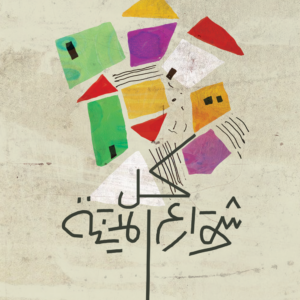
EGP150
“Safe streets, for the city never sleeps.
The sound of dice rolling across the tables.
At the corner, the smoke of shisha rises,
and the voice of Umm Kulthum. No, I think I’m only imagining it,
for her voice, too, has gone,
like everything else I summon from memory.
A café for men, no place for a woman wandering the streets at night.
All I have left is the rhythm of the night,
a nocturnal walk with the hands of the clock.”
“All the Streets of the City” by Noha Abdel-Rasoul
-

EGP150
This short story collection by the talented young Algerian writer **Ghazlane Touati** is characterized by a spirit of experimentation and boldness. The collection includes more than forty stories.
-

EGP100
The I.S.T.A. (International School of Theatre Anthropology) was founded in 1979 by Eugenio Barba, and its first session was held in 1980 in Bonn, lasting for an entire month. Barba explains: “ISTA is an attempt to give form and continuity to something that was born spontaneously, primarily in Italy. It is an unusual environment that brings together actors, directors, and theatre historians. At the heart of this environment is Odin Teatret. In order to give this phenomenon a name and a dynamic form, a number of scholars and artists from different continents joined it. It is a mixture of languages—a Babylonian mixture of a shared village, where it becomes increasingly difficult to constantly distinguish between artists, technicians, and thinkers, and where it is no longer possible to separate East from West… The paper boat came from this village, the village of Sanjukta Panigrahi.”
-

EGP400
There are only two poets entitled to write the foreword to a selected collection of Mohammad Rasho’s poems: **Sargon Boulus** and **Monzer Masri**. The first has, unfortunately, been unavailable for more than fifteen years. And so, anyone with tears still in their eyes has no choice but to settle for the second option—whatever its shortcomings may be.