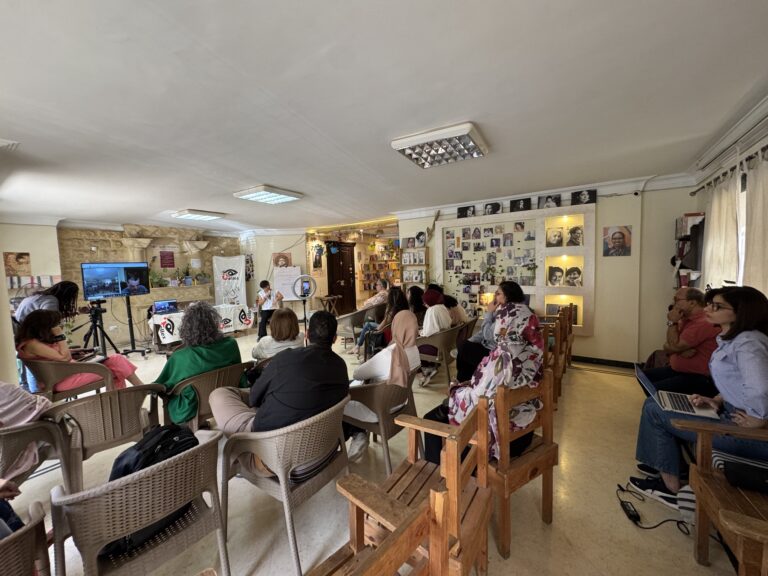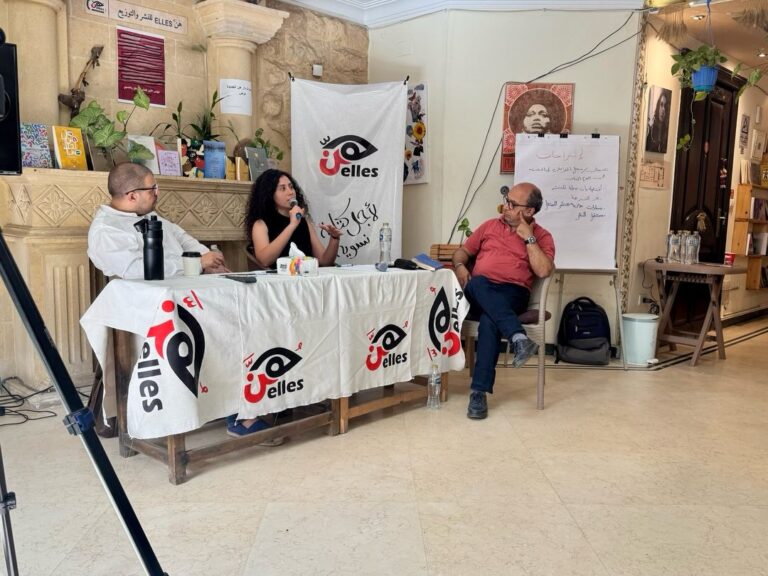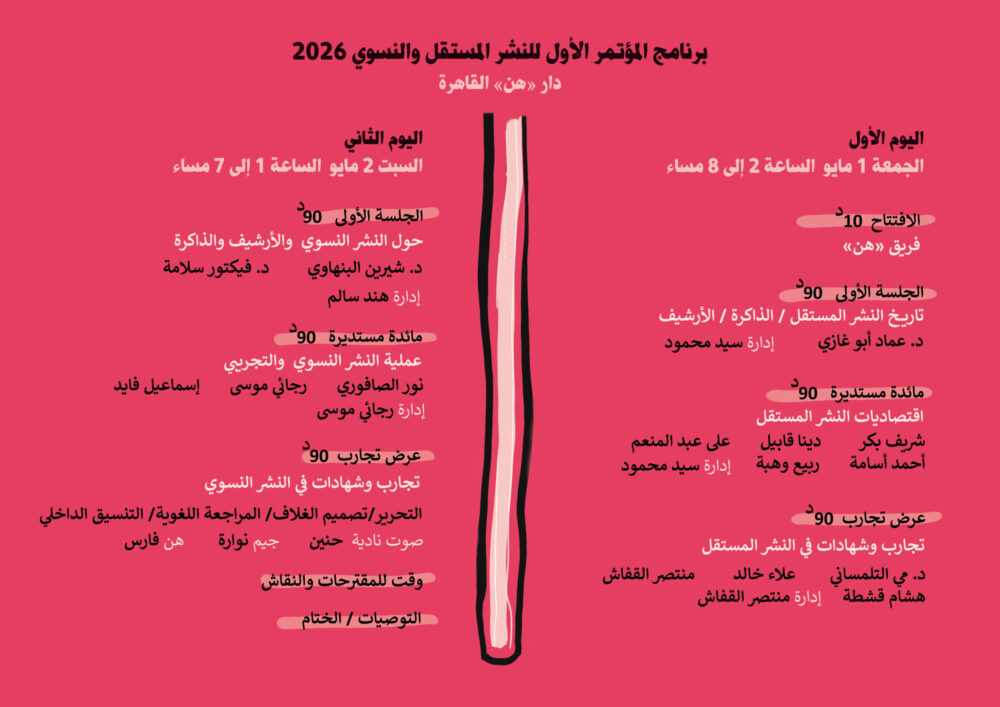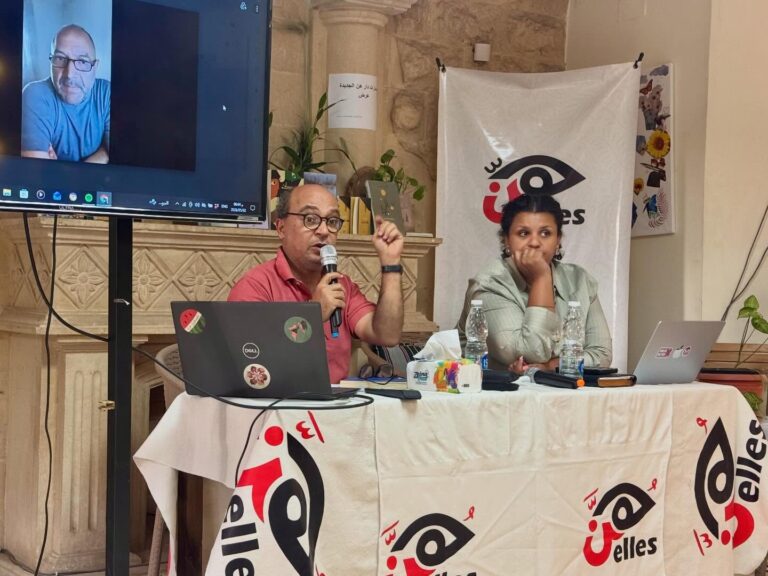
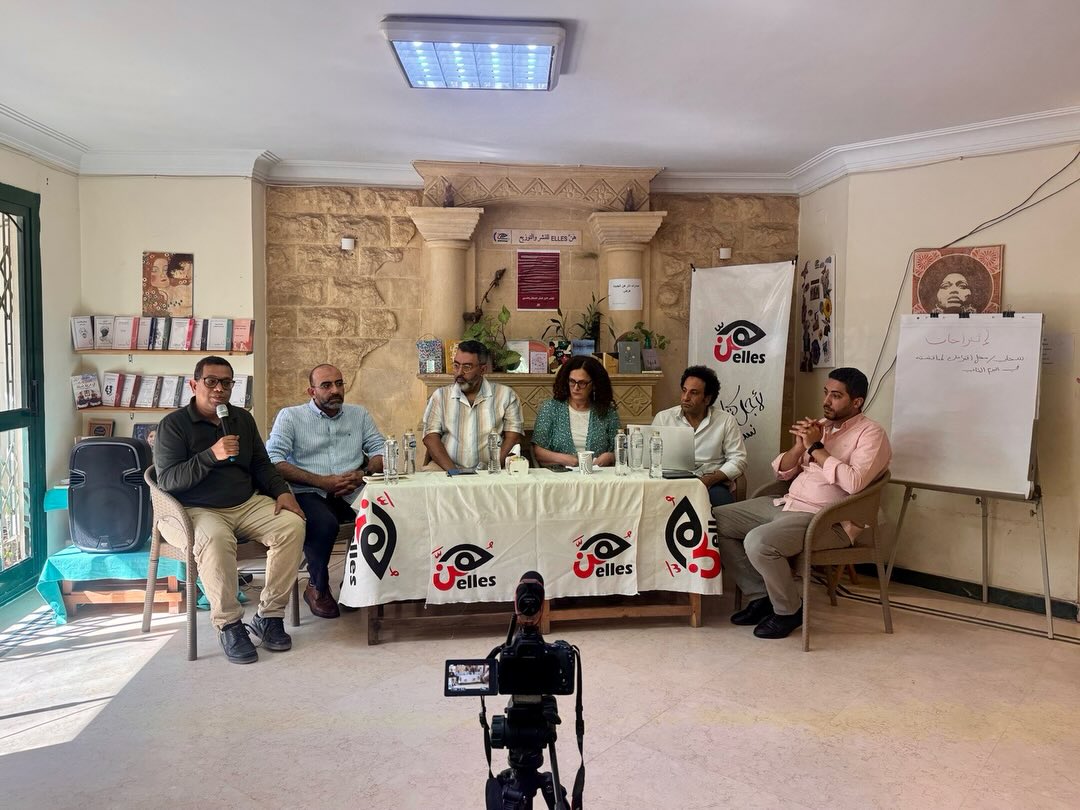
As part of the First Feminist and Independent Publishing Conference 2026, a roundtable titled “The Economics of Independent Publishing” brought together key voices from the sector: Sherif Bakr, Director of Al Arabi Publishing House; Dina Kabil, Founder of Maraya Publishing House; Ahmed Osama, Publishing and Author Relations Coordinator at El Shorouk Publishing House; Rabie Wahba, freelance researcher and translator; and Ali Abdel Moneim, Co-founder and CEO of Arabookverse. The session was moderated by journalist Sayed Mahmoud.
The discussion addressed the major economic challenges facing independent publishing, most notably issues of distribution, the limited size of the market, and the difficulty of reaching readers, alongside ongoing concerns related to sustainability and funding.
Sherif Bakr introduced the concept of the “publishing pyramid,” explaining that its base consists of high-demand books such as educational titles, followed by young adult literature, while more specialized genres, such as philosophy and translation, occupy the top with lower sales. He stressed the importance of publishers clearly defining their audience and position within this structure, noting that reaching non-readers remains a key challenge.
Dina Kabil discussed structural challenges in distribution, particularly financial burdens and the limitations of the local market, which often fail to ensure sustainable returns. At the same time, she highlighted the ability of independent publishing to develop alternative strategies to adapt to these pressures.
Ahmed Osama focused on the gap between publishers and readers as one of the industry’s main challenges, emphasizing the need to keep pace with changing reader behavior and market dynamics. He underscored the importance of interactive engagement strategies, as well as the role of marketing and communication in enhancing content visibility and reach.
Rabie Wahba highlighted the importance of economic awareness within publishing, pointing to emerging economic and cultural models, and noting the role of independent initiatives in supporting alternative voices, particularly within feminist publishing.
Ali Abdel Moneim identified distribution as one of the sector’s key challenges, stressing the need to define clear positioning within the publishing market and to view publishing as a form of content creation. He also emphasized the importance of a strong digital presence and selecting the most effective formats for delivering content, particularly through digital and audio platforms.
These discussions reflect the role that the conference, organized by Elles Publishing House, seeks to establish as a space for dialogue and for rethinking the future of independent and feminist publishing.