
Narratives of Exile
EGP300Experiences of Syrian women writers in exile after a war…
Showing 37–48 of 54 results
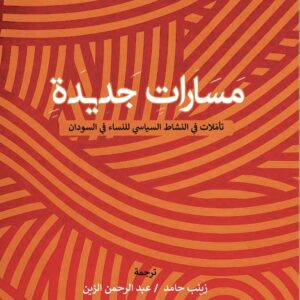
In recent years, the lives of women in Sudan have been affected not only by the general political and economic deterioration, the civil war, and the displacement caused by years of dictatorship, but also by the violent ideological assault directed against them by state-sponsored Islamic fundamentalism. The takeover of power by the National Islamic Front (NIF) in 1989 was accompanied by calls to return to traditional Islamic and family values. Women in northern Sudan were expected to return to their roles as guardians of faith, family, and morality. Many of the gains achieved in previous years regarding family benefits, labor rights, and civil rights were reversed.
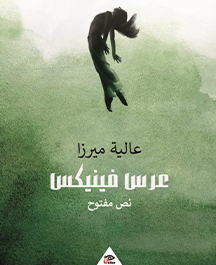
In my next life, I will choose another planet—a planet whose earth knows no gravity. A place where I will never have to shield my head from falling apples. A planet whose inhabitants have no need for language, where dance is the means through which they speak to one another. Like a nomad, I will carry my days in the palm of my hand as I wander across open plains. I will perfume my body with lavender so that its fragrance lingers in the memory of my beloved’s unruly senses. Every morning, he saddles his horse to chase gazelles and the wind; every evening, he returns to sprinkle musk upon my pillow, waiting for a sun that dares, once again, to rebel against the setting.
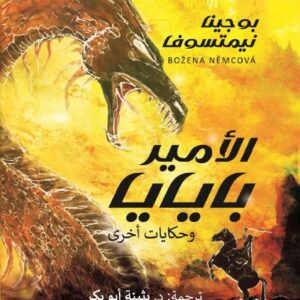
Folk literature is rich with numerous experiences that reflect the psychological states and inner worlds of peoples. The folktale is a fundamental element of the oral expression of cultures, presenting a set of characteristics closely connected to social structures. For this reason, it has attracted the attention of scholars in comparative literary studies, as it helps identify the distinctive features of different societies.
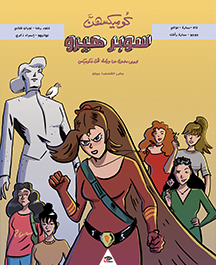
Death is easy. Life is the hard work. As **Khaled Khalifa** once wrote, it is not death that demands the greatest effort, but life itself. Heroism is not an extraordinary act beyond human nature; it is something simple, an ordinary daily practice: preparing breakfast for our children, going to the market, finding the strength to go to work, defending the air, the soil, and the water, and finding friends with whom we can speak.
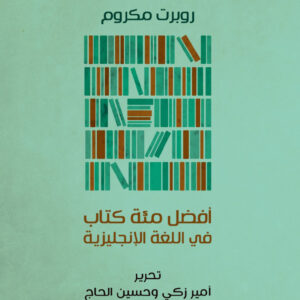
Makroum’s point of view is that this distinction stems from the way books are organized in libraries. If we enter a library, we will most likely find the classification divided into two main sections: Fiction (works of fiction) and Nonfiction (non-fiction works). But does this mean that short stories should be placed together with novels? And why did Makroum not include his short story recommendations in the novels list or create a separate list for them? In fact, Makroum himself acknowledges that he exercised a certain degree of arbitrariness, both in establishing the criteria for the two lists and in selecting the works included in each. He openly admits this in both books.
How much writing has saved me from madness, illness, and extremism! How much I have hated it because it taught me hardness and harshness! And how much I have taken pride in it as a badge of distinction, like that worn by an outstanding student!

In the eyes of great writers, I am a poor writer. In the eyes of poets, I am an intruder—a collector of the dry remnants of words. In the eyes of profound readers, I am a superficial reader. In the eyes of the distinguished intellectuals, I am hollow. In the eyes of the religious, I am a sinner; and in the eyes of the most devout, I am a heretic. In the eyes of my tribe, I am a shameful regret, a disgrace. In the eyes of my relatives and family, I am a lasting dishonor. In the eyes of my friends, I am a source of mockery. In the eyes of creditors and landlords, I am a deceiver. In the eyes of women, I am ugly. In the eyes of children, I am frightening.

This short story collection by the Syrian writer **Hossam Qalaji** evokes nostalgia for homeland, the pain of exile and displacement, as well as stories from Damascus. The stories are characterized by a dark and fantastical atmosphere.

I tore up the dedication I had written for your birthday. I read it one last time to the only companion I had left (my restless heart): Yesterday, Mr. Herbert, Frog, some friends, and I had tea together to celebrate your birthday. I told those fools that you do not like sugar, so they finished all the sweets. I am sending your gift by mail. Herbert sends his regards, and Frog says to you, “Goodbye until tomorrow.”
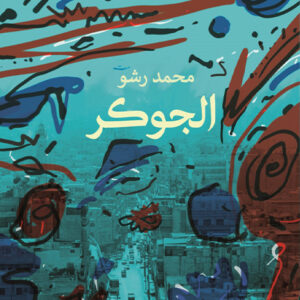
(The Joker) is a collection that breathes warmth and life into its stories, enabling them to fulfill their distinctive artistic and social role. It is as though Muhammad Rasho, the author of the collection, is the same Muhammad Rasho the doctor (one of the characters in the book), except that he heals our souls with his pen.