“The Motherhood Dilemma” has been added to your cart.
View cart
Showing 49–54 of 54 results
-

EGP150
When writing about motherhood, it is impossible to forget the mothers of Gaza. Several of the essays in this volume were written during the Israeli assault on Gaza, amid the targeting of children and the systematic destruction inflicted upon its people. Writing became profoundly difficult for many of the contributors. In the face of death and devastation, everything—including writing itself—seems to lose its meaning. How can we question and reimagine motherhood when mothers are forced to watch their children die before their eyes? This was, in truth, a different kind of dilemma: one that obstructed the very possibility of imagining alternative visions of a world revealing its darkest and most brutal face. Even so, we realized that we had no choice but to complete this book. We chose to express our anger not through silence, but through writing. In this volume, feminist writers from diverse backgrounds, generations, and contexts examine the question of motherhood through a range of theoretical perspectives and approaches, weaving together the personal and the political, the historical and the lived experience.
-

EGP300
Although the vast majority of people are born male or female, many are born with variations in their anatomy, chromosomes, secondary sex characteristics, or other biological traits. Some of these variations may be recognized, while others may go unnoticed. In some cases, they do not fit neatly into the categories of “male” or “female” according to prevailing medical, legal, or social standards. These diverse variations are referred to as **intersex**, a term adopted by the medical community during the twentieth century to describe individuals whose biological characteristics cannot be definitively classified as either male or female.
-
EGP200
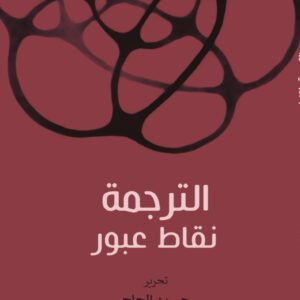
Through its two sections, this project aims to open discussions on translation into Arabic and to follow the latest developments and news in the field of translation. A significant part of the project’s efforts is dedicated to translation studies, a field that remains insufficiently explored in the Arab world despite its growing importance amid the recent increase in translated works. The project seeks to provide comprehensive content on translation studies and to bring this field beyond academic circles, making it accessible to translators—from beginners to experienced practitioners—as well as to general readers, enabling them to engage with the latest developments in this area. Our broader goal is to raise awareness about translation, after decades of overlooking its vital role in enriching culture and disseminating ideas. We also seek to emphasize that the translator is not merely a transmitter of texts, but rather an individual who is creative, engaged, and an active participant in the cultural sphere.
-
EGP100
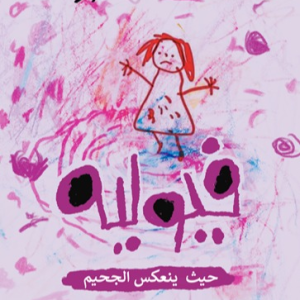
“Whenever I return in my thoughts to the summer of 1974, I remember that I was already over thirty years old, yet I was still unable to confess to Yima what I had suffered on the rooftop with Nora. My sense of shame prevented me; there was no point in speaking. In reality, a wide river of lies flowed between my mother and me. I never admitted what had happened to me on that day when I went out during her nap. Even after thirty years, I was still unable to summon Yima to an intimate trial between the two of us, where I would stand alone before a court with no jury, no defendant, and no witnesses.”
-

EGP100
Although the sacred religious text—the Qur’an—is one and the same, its interpretation is multiple and continually shaped by the demands of time and place, as well as by social and political realities. As Ali ibn Abi Talib famously observed, “The Qur’an bears many meanings.” These meanings emerge through different readings, perspectives, and, consequently, interpretations. Likewise, although popular discourse is embodied in widely circulated texts such as proverbs and traditional sayings, it reflects multiple, evolving, and flexible discourses whose influence varies according to political and social contexts and prevailing levels of public consciousness. Unlike the Qur’an, popular beliefs possess no original sacred text. They therefore have no inherent sanctity; rather, they derive their legitimacy either from collective acceptance through custom and tradition or by being linked to religious discourse, from which they borrow both legitimacy and sacred authority.
-

EGP300
The research in this collective volume covers multiple fields, ranging from critical to structural approaches, from theoretical/epistemological perspectives to practical applications, from methodological to analytical studies, and from historical contexts to lived contemporary realities, as well as from textual readings to contextual analyses. All of these contributions adopt an Arab/Islamic feminist approach, with diverse yet interconnected themes that seem to intersect with and engage one another. They share a common interest in examining the mechanisms of…