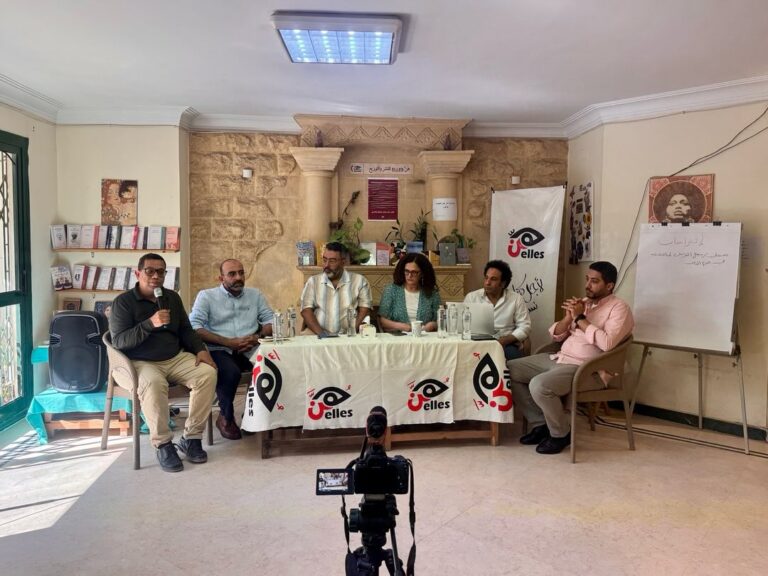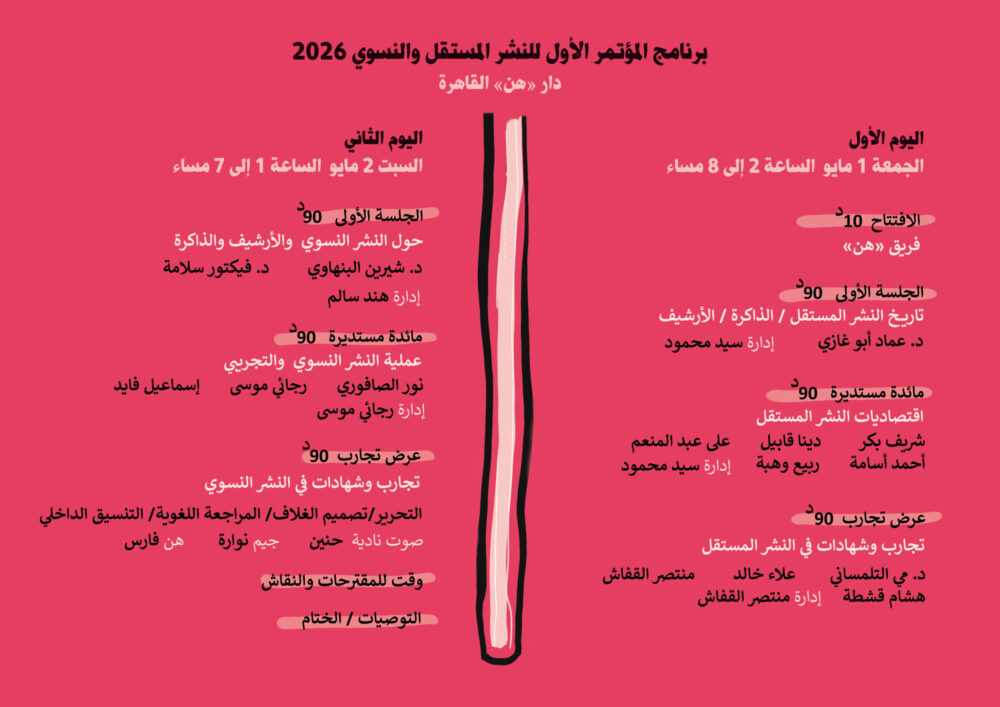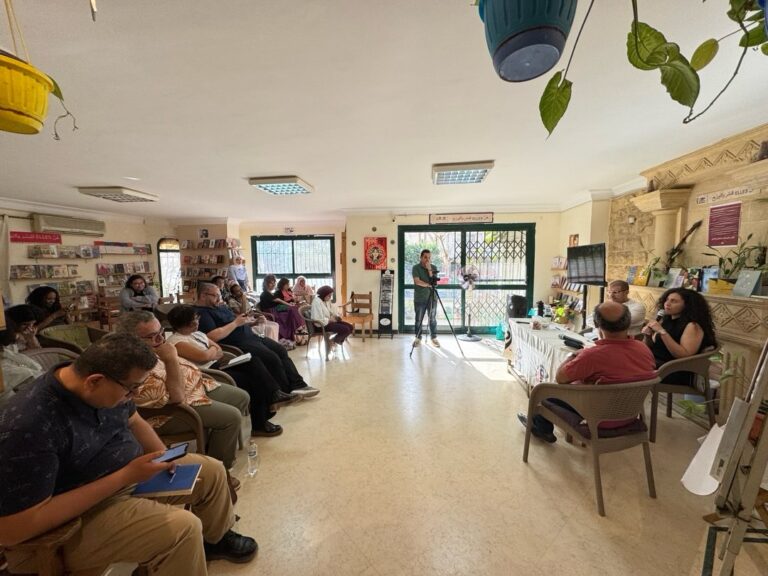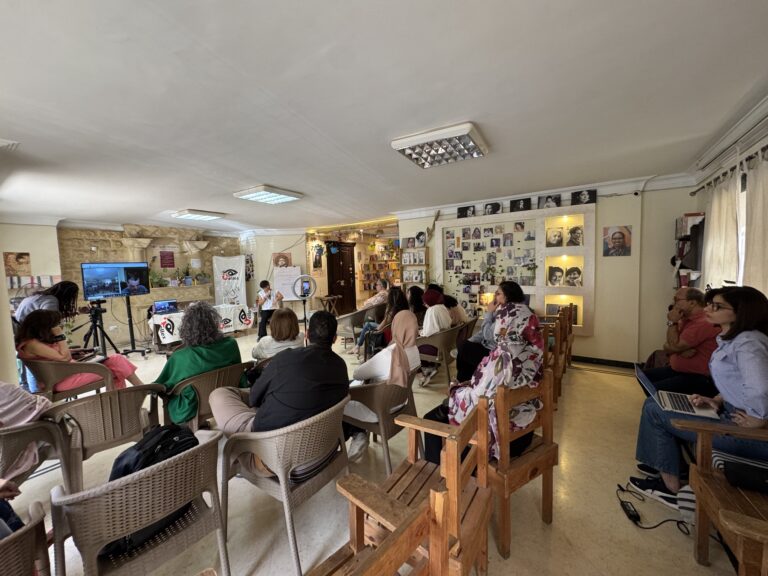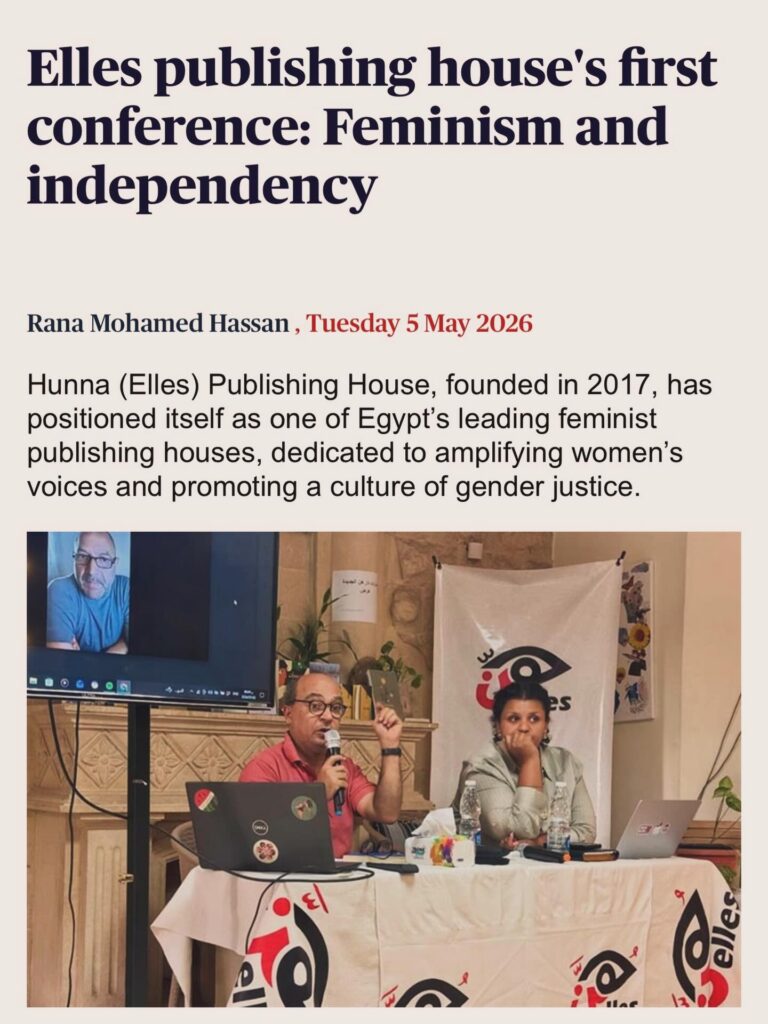
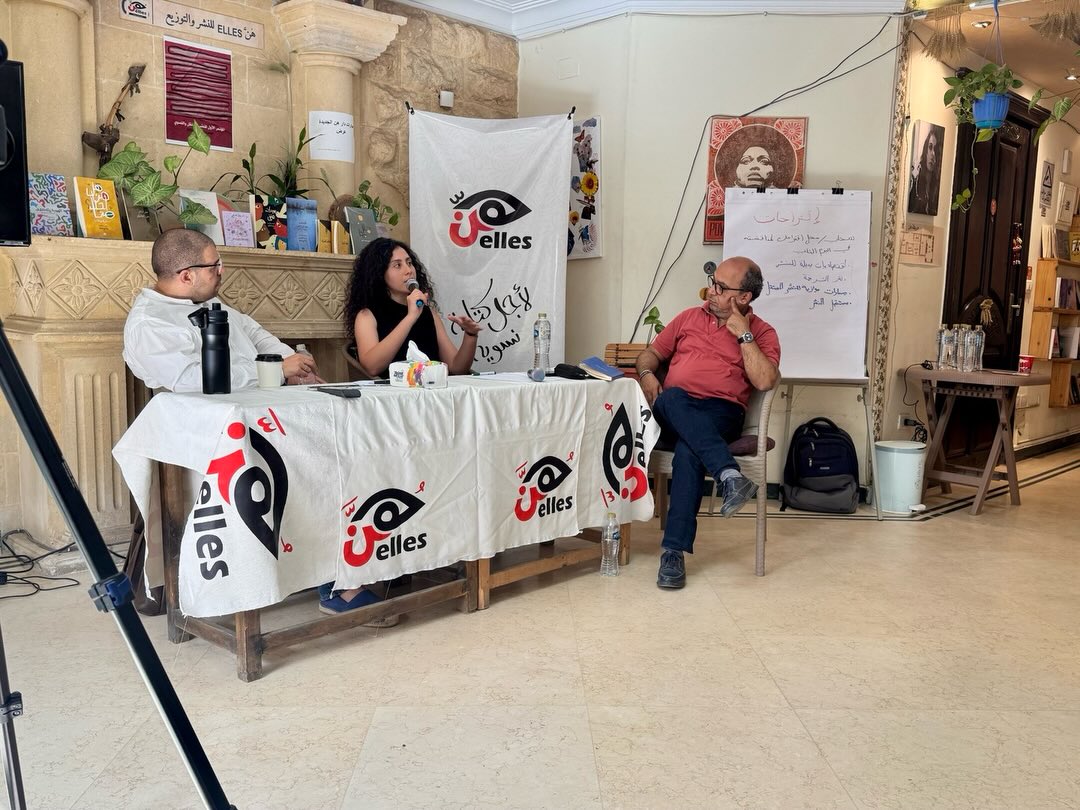
As part of the First Feminist and Independent Publishing Conference 2026, a roundtable titled “The Process of Feminist and Experimental Publishing” brought together writer and critic Ismail Fayed and Nour El-Safoury, Editor-in-Chief and Publisher of the Esmat publishing series, moderated by Ragai Moussa.
The discussion explored the relationship between feminist publishing and experimentation, as well as the economic and cultural challenges facing independent initiatives, alongside the role of publishing in creating new spaces for expression and bringing diverse voices to audiences.
Opening the session, Ragai Moussa spoke about the economic pressures shaping independent publishing, noting that “economic challenges have pushed us to experiment with new ideas, such as collective feminist translation workshops.” He described feminist publishing as “a form of risk-taking that creates new spaces,” emphasizing its role in documenting everyday experiences that often remain outside dominant narratives.
Ismail Fayed focused on the relationship between writing and readership, stressing that writing, even when rooted in self-expression, ultimately seeks an audience. “We cannot predict the impact of our cultural initiatives, but disrupting the familiar and introducing new perspectives is, in itself, an achievement,” he said. He also noted that expanding participation in cultural spaces requires rethinking how literary works reach audiences beyond limited settings such as workshops.
Meanwhile, Nour El-Safoury described feminist publishing as a space for imagination and amplifying women’s voices, emphasizing the importance of supporting diverse writers while considering both readership and accessibility. “The publisher, in its broader sense, is a driver of ideas and a creator of new communities,” she said, raising questions around sustainability and its connection to cultural and economic structures.
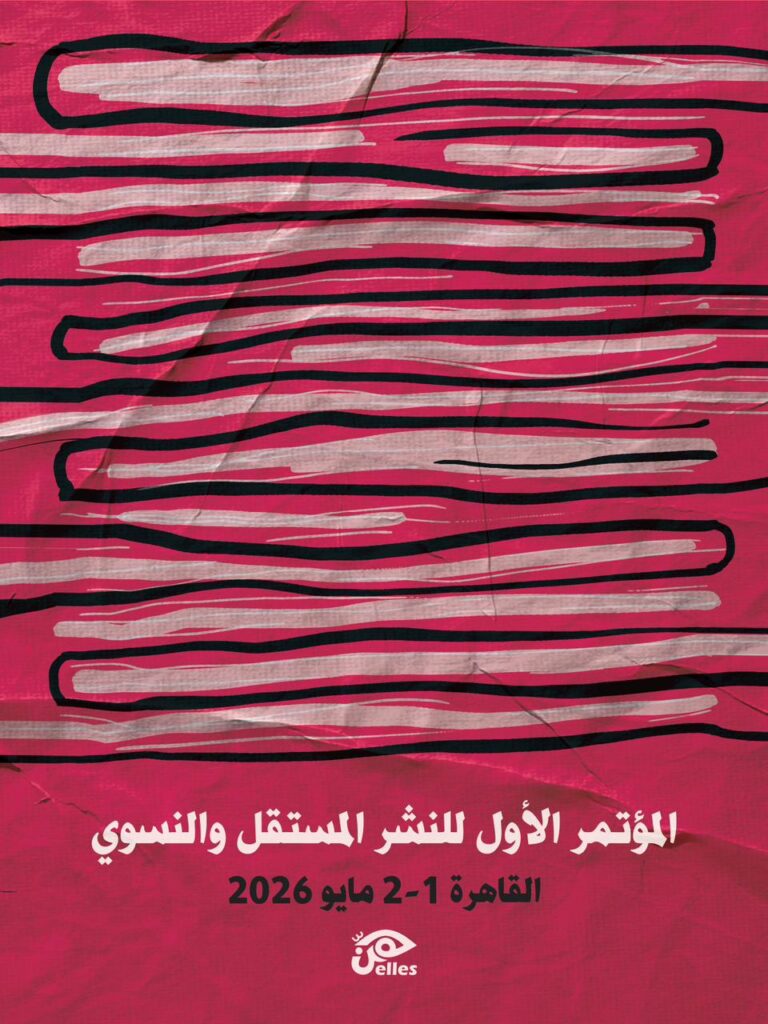
The session reflected the role that the conference, organized by Elles Publishing House, seeks to establish as a platform for dialogue, experimentation, and rethinking alternative forms of publishing and their future.